
Not all dog trainers use the same approach to teaching dogs obedience skills. Some professionals lean on rewards alone, while others reinforce control before the dog understands the lesson. The Michael Ellis dog training philosophy offers a structured middle ground because it teaches the dog first and adds accountability through fair communication.
This approach treats training as a skill-based relationship between the dog and handler. The dog learns why engagement has value, and the handler knows how timing and motivation shape behavior. Understanding this philosophy before you take your pet to a trainer who follows this strategy will help you decide if this is the right training program for your pup.
Who Is Michael Ellis?
Michael Ellis is a respected trainer whose work spans companion dogs, service dogs, police dogs, and more. Over several decades, he has trained dogs in demanding environments and shared that knowledge with fellow trainers.
His experience shaped a teaching philosophy centered on motivation, engagement, and structured learning. While many people associate his name with high-level working dogs, the principles he teaches apply to everyday training goals as well. The same concepts that build reliable performance in advanced dogs can guide a puppy learning house rules or an adult dog developing calm behavior in public.
Training Begins With Engagement
Ellis emphasizes creating interest before formal obedience becomes the focus. A dog that wants to participate learns with minimal conflict and ample enthusiasm.
Food and toys serve a purpose beyond simple bribery. They help the trainer create movement and focus. Over time, the dog begins to view the trainer as the source of direction.
Trust Comes Before Teaching Commands
Trust sits at the center of the philosophy because dogs learn best from consistent individuals. A trainer who rushes into commands before building a connection often gets confusion instead of commitment. The dog might comply in one moment, then disengage as pressure rises.
A trust-based foundation doesn’t mean the dog runs the program. It means the trainer proves reliability before teaching new skills.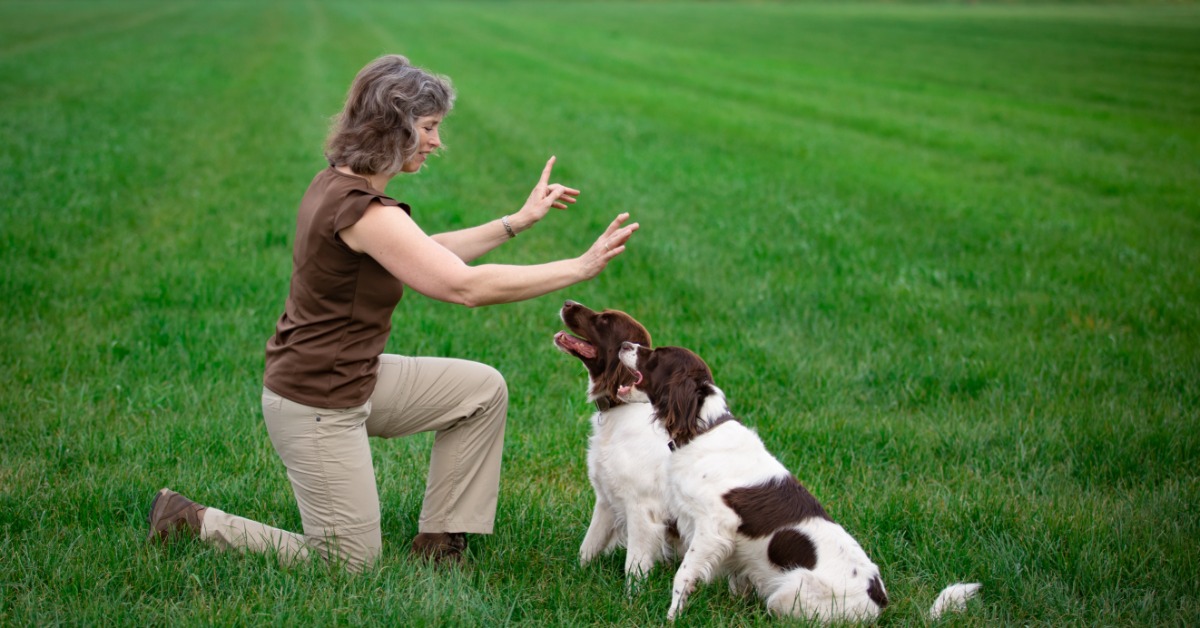
Rewards To Shape the Dog’s Understanding
Positive reinforcement teaches the dog which actions lead to success. In the Michael Ellis system, rewards mark meaningful effort during the learning stage. The trainer does not wait for a finished behavior before rewarding progress.
Small wins matter during early lessons because complex skills develop in layers. A dog learning heel position might first receive a reward for moving near the handler. Later, the trainer refines body position or duration.
Breaking Skills Down Into Steps
Underneath a finished command, the dog has learned several small concepts that come together through repetition and clear communication. Position and release cues come first because the dog must understand where to be and when the exercise ends. Duration enters later as the dog learns to hold the behavior for longer periods of time. Distraction training follows once the dog can perform the skill reliably in a quiet environment.
A place command offers a useful example of this process. The dog first learns how to move onto the designated bed or platform. Once that step becomes consistent, the trainer teaches the dog to remain there until released.
After the dog understands those expectations, the trainer gradually increases the amount of time spent on the place command. New distractions—ranging from movement to greeting new people—enter the lesson in stages. Each step builds on the previous one, helping the dog understand the entire exercise instead of memorizing a single moment.
Motivation Drives Strong Work
Motivation sits at the heart of the learning process because dogs repeat behaviors that produce rewarding outcomes. Rather than expecting obedience through repetition alone, the trainer identifies what the dog values and uses that reward to create enthusiasm for the work. Some dogs respond strongly to food, while others become highly engaged through toys and play. When the reward matches the dog’s interests, the dog develops a strong desire to participate.
This philosophy recognizes that motivation varies from one dog to another, which is why trainers evaluate each dog’s drives before building a training plan. As the dog learns that effort leads to success, confidence grows, and engagement becomes more consistent. When distractions rise, the dog remains focused because the training process has become rewarding and worthwhile.

Corrections Follow Understanding
A dog that receives correction before learning the skill might become worried or frustrated. That’s why balanced training is a primary component of this training philosophy. The trainer teaches first through reward and guidance. Only after the dog understands the command does accountability enter the picture.
A simple recall example shows how this process works. During the early stages, the trainer rewards movement toward the handler and gradually builds reliability through repetition. The dog learns exactly what the command means before any form of correction enters the lesson.
Once the dog consistently understands the recall command the expectations change. If the dog hears the command and chooses to ignore it, the trainer can provide a fair correction because the dog already knows the required response. The correction communicates that the known command applies, even with distractions.
Training Reduces Emotional Conflict
Many behavior problems develop when a dog becomes overwhelmed with excitement or uncertainty. Dogs that bark, lunge, or react intensely often struggle to understand what behavior is expected in challenging situations. The Michael Ellis dog training philosophy addresses this issue through a combination of motivation and structure.
Consistent expectations strengthen a dog’s confidence when responding to stressful moments. Rather than focusing solely on stopping unwanted behavior, the trainer teaches specific skills that guide the dog toward productive choices. Over time, this process builds understanding and self-control because the dog learns how to navigate distractions and stress through practiced behaviors.
How Does K9 Academy Apply the Michael Ellis Philosophy?
The Michael Ellis dog training philosophy gives owners a new way to think about training and trainers an effective way to teach pets new skills. The trainers at K9 Academy utilize these training principles to produce the best outcomes for dogs.
Each of our trainers undergoes rigorous training based on this philosophy. From gaining the pet’s trust to leveraging the rewards-based system, our team knows how to teach dogs a wide range of commands. Owners who want obedience that carries into daily life, contact our team today to sign up for practical, relationship-centered dog training.