
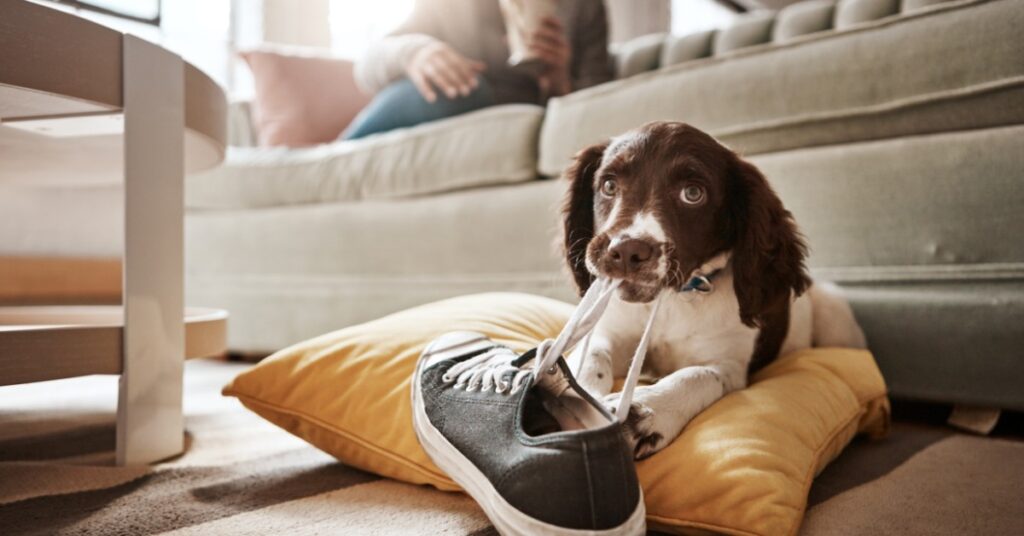
Bringing home an adorable puppy fills the house with excitement and plenty of memorable moments. Along with that excitement comes chewing, nipping, jumping, and several other behaviors that require the patience of obedience training. While some of these silly puppy habits seem harmless at first, they become bigger problems when the dog grows up. Addressing those habits early prevents them from becoming frustrating patterns that become difficult to break.
Chewing on Household Items
Puppies explore the world with their mouths, so chewing comes naturally. Teething only makes things more intense because their gums feel sore and they look for anything that brings relief. That’s why a chair leg, shoe, or remote control becomes more interesting than the toys you bought. From the puppy’s point of view, everything in the house feels fair game, and it doesn’t understand the difference between “mine” and “don’t touch.”
Each time the dog chews something off-limits, it learns that the behavior works. Over time, that one harmless moment turns into a routine. If it continues into adulthood, the dog can end up damaging furniture or swallowing something unsafe.
Going Potty in the House
Accidents inside the house typically occur because puppies don’t fully control their bladder yet or understand the routine. You might see a puppy squat right after waking up or drift off during play and suddenly go in the wrong spot.
Punishing a puppy after an accident doesn’t help; dogs don’t know how to link your reaction to the earlier behavior. Puppies only understand what’s happening in the moment. Take the puppy outside often—right after sleeping, eating, or playing—and give it plenty of chances to get it right. When it goes in the correct spot, praise it right away so it clearly understands the win.
Chasing After Bad Behavior
Owners react quickly when a puppy grabs a sock or snatches food off the counter. It feels natural to chase after the puppy to get the item back, but that reaction backfires. From the puppy’s point of view, the sudden movement, raised voices, and excitement turn the whole moment into a game. The stolen object stops being the focus, and the chase becomes a reward.
Once that pattern kicks in, the puppy starts to see grabbing “off-limits” items as a surefire way to get attention and playtime. As the dog grows, they’ll continue to grab household objects. This habit could turn into more serious issues, like destroyed belongings or swallowing something unsafe.
Nipping at Hands and Clothes
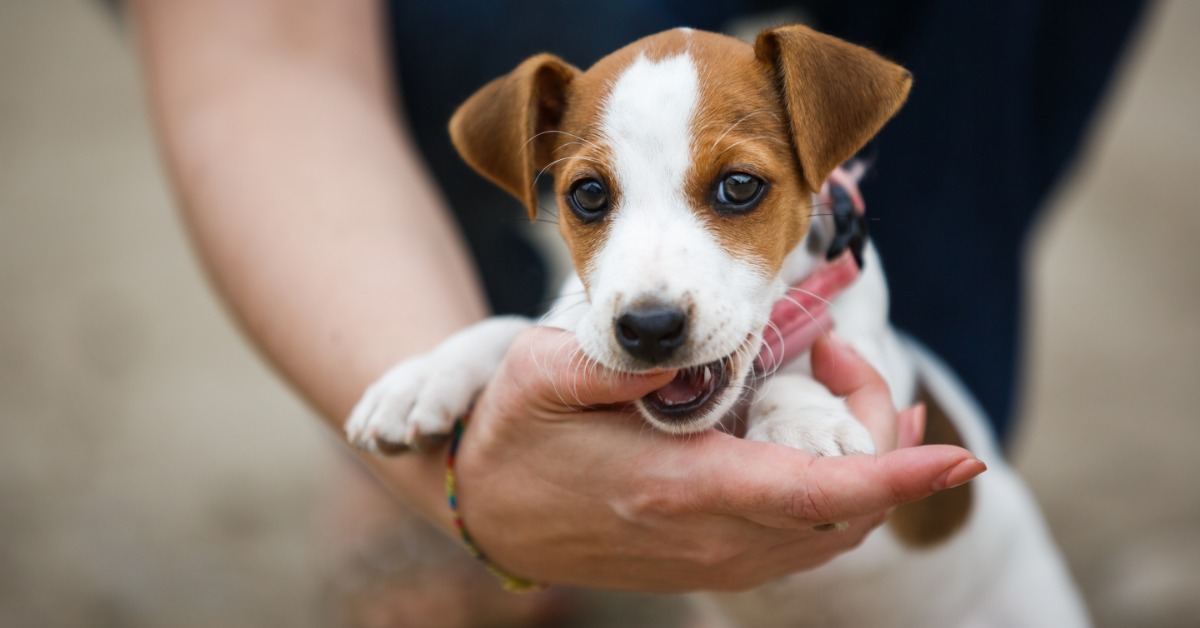
Puppies explore the world with their mouths, so a little mouthing during play comes naturally. They do the same thing with littermates, so your hands, sleeves, and moving feet all look like fair game. Fast movement and excited voices are ways to trigger this instinct.
The problem shows up when the nipping doesn’t fade as the puppy grows. As their teeth become strong, those once playful bites begin to hurt. If a puppy learns that biting always gets a reaction—whether it’s laughter, attention, or scolding—they may bite harder just to continue the interaction going. That can quickly become overwhelming, especially for kids or visiting friends who don’t expect the behavior.
Feeding Food From the Table
Sharing a bite at the dinner table seems harmless at first. After all, pets are family members, too. However, the moment they realize that staring, whining, or pawing gets them a reward, they will repeat it every mealtime.
Before long, begging turns into intense behavior. Some dogs bark during meals or climb onto chairs to get face-to-face with the food. Others begin guarding anything that falls to the floor because they’ve learned that table scraps carry high value. Refraining from feeding your pup from the table will prevent them from causing a scene at every meal as an adult dog.
Refusing To Walk on a Leash
Leash walks can feel overwhelming for a young puppy, so it’s pretty common to see them freeze in place or pull backward during the first few outings. The leash itself feels strange, and everything around them—sounds, movement, and new smells—competes for their attention. If you add in busy sidewalks or passing dogs, a puppy with little experience can easily shut down or resist moving forward. That reaction usually comes from uncertainty, not stubbornness.
A good approach is to begin training in an area with very few distractions. The dog will feel safe enough to explore. From there, reward just a step or two of movement beside you, and they’ll gradually feel more and more confident.
Jumping on People
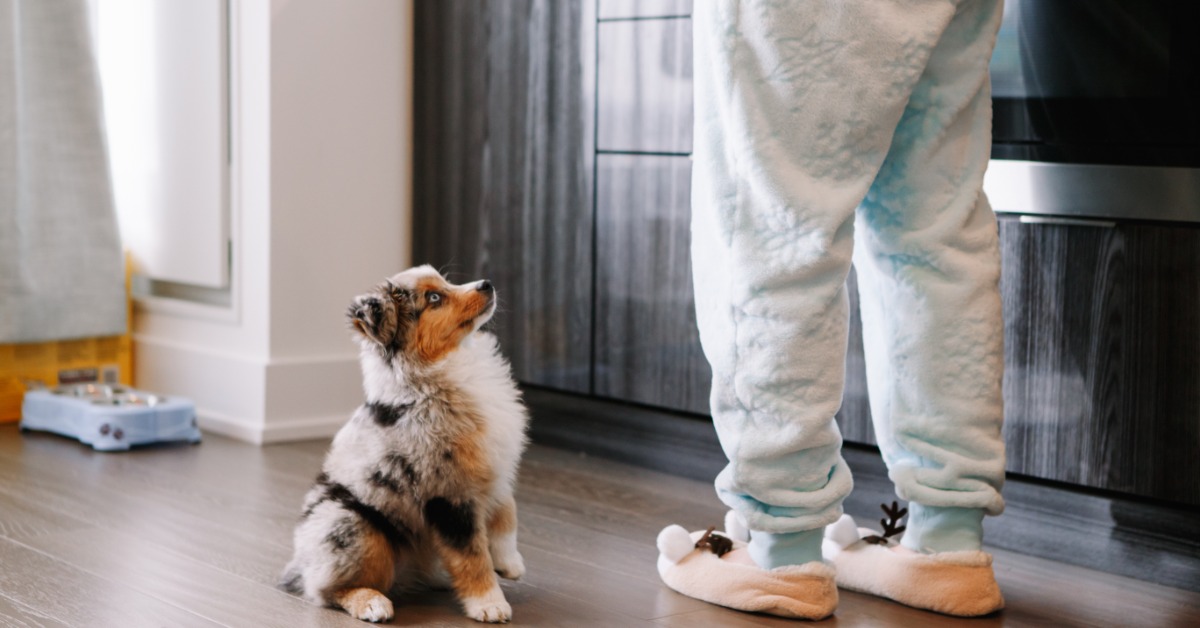
A puppy that weighs under 10 pounds is harmless. In fact, many people find the excitement endearing. But if a 20- or 50-pound dog jumps eagerly on a person, the situation can become dangerous. Bigger dogs can easily knock over kids, scratch guests, or overwhelm someone who isn’t steady on their feet.
The issue stems from rewarding the puppy with attention as they’re jumping, including petting and kissing. Even telling the puppy “no” can still come across as attention, so the habit sticks. Your pup will learn that jumping is a reliable way to get a response as soon as someone walks in the door.
Crying During Brief Absences
Some puppies start crying the second you walk into another room. In those early days, the puppy follows you everywhere, signaling a strong bond. It’s a cute or flattering response because the puppy seems so attached. But that constant access doesn’t give the puppy any practice being alone, so they never learn how to settle down without you nearby.
As this pattern continues, the behavior escalates. The puppy may start barking, scratching at doors, or pacing whenever you leave. Some puppies even stop eating or stay glued to the exit, waiting for you to return. In more serious cases, they may try to escape and end up hurting their paws or teeth in the process. At that point, the behavior goes beyond simple whining and signals real distress.
Teach Your Puppy Good Behaviors Early On
Puppies need ample guidance in order to understand their routine and which behaviors earn rewards. Being aware of the common puppy habits that could lead to bigger problems later on will help you train your dog effectively.
Innovative K9 Academy offers puppy obedience training that potty training, basic commands, socialization, and more. After the program, you will receive guidance for maintaining those skills. Sign up for our puppy training program so that your pup grows into a well-behaved dog.