
Training Instructions and Videos
Bringing Your Dog Home
When you come to pick your dog up for your dog’s transition lesson, please ignore your dog. This will help keep them from getting over stimulated during the session. They will definitely remember you; they always do. As soon as they see you, they will want to come say “hi”. They will want to stop listening to us, and hope they can go back to the way things were before training. Whatever behaviors they associate with you will immediately begin to manifest. It will take a few minutes for them to settle down, and realize the same rules still apply with you. After they settle down with us, we will have you start handling them. This will probably bring out some of the behaviors they associate with you(ie. jumping up, whining etc.). It will take a few minutes for them to settle down with you as well. However, by the end of the session they should be listening and behaving very nicely with you. The more times you read through this and watch the videos, the better results you will have with the transition lesson, and with the dog in your home.

Here are some videos that are essential to be prepared for the transition lesson
Start of the day! The collar should go on first thing in the morning and come off at the end of the day. Do the bed each day. After taking your dog out to go potty, have your dog practice the bed command while you get ready for the day.
Taking your dog for a walk. This should be a calm and fun exercise. For the first two weeks stay in low distraction areas like your back yard, front yard or driveway. This will set your dog up to be successful.
After you and your dog have perfected heeling and the other obedience around your house, it is time to start going out in the world. The key points are watching your dogs body language and doing a reset or right hand turn as soon as you see them notice a distraction.
The “Come” command! The most important obedience exercise. This should be a part of your every day life. There shouldn’t ever be a day that you don’t use the come command… this means enforcing it too!
How to use the educator collar your dog has been trained with.
Talking about separation anxiety. Nearly every dog we train has separation anxiety to some degree. This video will help train that out of them.
The “Reset” – This is one of the best things we have ever implemented in our training. This is the main tool we use to teach our dogs to focus on us.
Building Confidence
The three most common factors we see leading to dog’s behavioral issues are: fear, nervousness, and anxiety. Dogs were bred for very specific purposes. Each breed has drives and instincts that have developed over hundreds and thousands of years. We no longer have the need for most of the purposes that these dogs were bred for.
We are now bringing these dogs into our homes and expecting a dog that was bred to kill to now sit quietly on our laps, be nice, not chase kids, and ignore the cat. We are fighting these instincts every time we house train, or teach a dog obedience. This causes a lot of confusion, stress, and frustration with both the dog and the owner.
We also used to breed dogs for athleticism, confidence, drive, health, motivation, train-ability, and a host of other positive behavioral and physiological traits. Now we generally breed for size, color, fluffiness, intimidation, or cuteness. Once we started breeding for cosmetic traits and ignoring qualities that determine temperament and workability those positive traits started disappearing from their gene pools.
Anthropologically speaking, the most confident of any species generally does not get the opportunity to reproduce. Also, a healthy level of wariness has been very useful for all of the herding, guarding, hunting, and fighting dogs which pretty much covers all of them. 150 years ago, if a Border Collie bit a stranger that walked in amongst the cattle it would probably be rewarded with an extra piece of meat. That same breed was at one time expected to take on a thousand pound bull. A certain level of anxiety helps the dog to be much more observant, cautious, vigilant and protective. Fast forward to today and we now want that same breed to be friendly to strangers, sweet, play nicely with little kids, and love the hamster. You should be able to see how this causes inner turmoil and confusion in both the dog and owners.
To work through this requires a lot of very positive experiences to start to overcome your dog’s natural negative bias towards everything new and different.
Obedience
Obedience is all about leadership. Our aim is to have the dog in a mindset that in stressful situations they are looking to us for guidance rather than making decisions on their own. Especially in situations like being out in public or around distractions.
One of the most common fears among dog owners is their dogs forgetting them. First of all, your dog will most definitely remember you. In fact, they are going to lose their minds as soon as they see you. So like we stated above it is VERY important that when you come to pick them up after their training, you completely ignore them. Whatever behaviors they associate with you, they will try to immediately go back to as soon as they see you. We want this first interaction to be positive and set the tone for your future relationship; they need to understand that the same rules apply with you as they did with us. They will be extremely excited to see you, and this is ok, but we want them to behave. They
will be so excited to see you that they will no longer think they have to listen to the person with the Innovative shirt on anymore. It usually takes about fifteen minutes into the session before they settle down and realize that they still need to listen and behave themselves.

Your dog associates a particular energy level, control (or lack thereof), and behavioral issues with you. So, when we demonstrate their obedience, they are going to have a conflict of loyalty. They know they should listen to us, but they are going to try to run back to you, and ignore us. They are off leash trained, but we are going to use a leash to help mitigate this from happening. Even after they have settled down with us, walking nicely and behaving very well, as soon as they walk with you they will lose their heads all over again. If they pulled on the leash, jumped around or reacted to other dogs they are going to try to go right back to those behaviors. Probably as soon as you start working with them. That is actually good because it will give us the chance to work with you and show you how to handle those types of behaviors. It is much better to have a rough session and learn how to work through it then have everything go well, get home and not understand what to do when problems come up. By the end of the session you and your dog will be working together much better and, more importantly, you will know how to handle your dog.
The first 48 hours will be the most challenging. Your dog is going to want to go back to all the behaviors that they associate with you and your home. It is very important to start your new life on the right foot. So we recommend that as soon as you get home you put the bed in a common area, and have your dog go on the bed and send someone around the house to the front door to ring the doorbell and knock. If the dog moves off the bed or makes any noise, correct them at the lowest level needed to stop the behavior. They are going to literally challenge you on everything, so just remember to be firm, fair, and consistent. One good correction is better than 100 little ones. If you never turn the collar up enough to stop the behavior pretty soon it becomes just background noise. They will ignore it, and they will ignore you. The more consistent you are with your corrections and rewards, the less you will have to correct them in the future. If your dog knows that every single time they do not listen they will be corrected, and if they still don’t listen you will turn it up, pretty soon they will stop challenging you.

Heeling will be the most difficult part because it takes practice, patience and perseverance to get it right. There are many moving parts. Your dog will need to learn to respect your leadership, and you will need to learn to be their leader. This type of formal heeling session is extremely important for you to build a healthy relationship with your dog. It is one of the best things you can do to be the leader for your dog. It is critical that you walk your dog and your dog does not walk you. If they want to go slower than you are walking, then you walk faster. If they are trying to walk ahead of you then walk very slow and make sure that they walk nicely with you. Anytime they get out of position bump them with the collar until they are back into the proper position with their shoulders in line with your hip. If they are walking away from you to the left, then you walk to the right and bump them with the collar until they are back into position. If they get out of position again, then turn the collar up a little each time until there is no longer any value in trying to get away from you and they accept your leadership.
Once your dog accepts your leadership, you will see a noticeable change in demeanor. If they respect you as the leader, they will not see a need to be aggressive towards strange people and dogs. A dog with fear and anxiety will be more calm and confident as they learn to trust you. Establishing leadership comes from expecting obedience. Dogs are like teenagers; they constantly want to challenge us to see what they can get away with. As long as you are very clear with the commands, they will know what to do. If they don’t do it, then they are challenging you to see if you are going to follow through with them. Each time you let them get away with something they feel empowered, and challenge you even more. They will start to develop a nasty attitude because they think they are in charge. Once they get to this point, it takes some bigger corrections to work through this. With consistency, though, most dogs will trust, listen, and follow you with very low corrections.
Our training is done using a very positive and motivational reward-based system. We only introduce low level corrections once the dog completely understands what we are asking them to do. This really helps us to have a good relationship with them and makes them excited to work and train. Without the corrections of the e collar, it is very difficult to have any kind of reliability with most dogs. For instance, if a dog was to take off after a cat. It would most likely be in a very heightened state of arousal, and aren’t going to care that they will get a treat if they come back to you. With the e-collar we have much greater reliability. It can reach half a mile away. It’s completely safe at all levels, and can be very easily turned up to whatever you need to for them to comply.
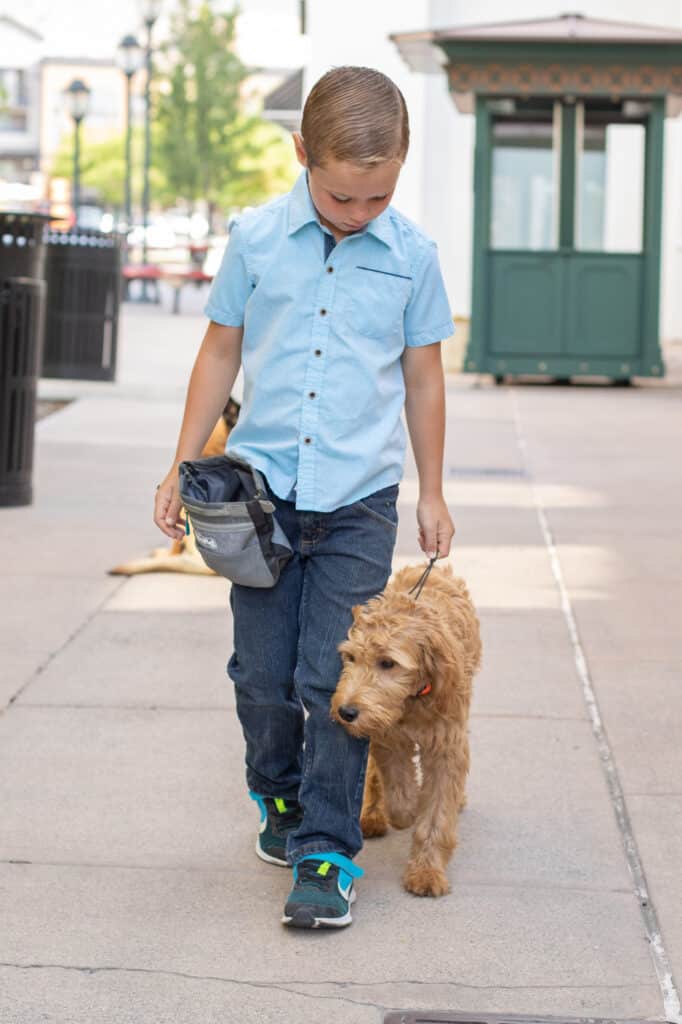
Keep in mind, you must be consistent to achieve reliability. It’s also important to continue rewarding them for good behavior as well. We want them to be reliable and we want them to want to do it, not just have to. This is a big part of our training and we’ve done a lot of work creating positive associations with their beds, the crate, and doing obedience. You can and should continue this by randomly rewarding them with their favorite treats, praise, and affection. Every time you call them, give them treats, praise, and affection. Reward them for being good on the bed, when someone comes to the door and they stay on their bed, when doing an automatic sit while heeling or laying down the first time that you ask them to.
We recommend that they spend a couple hours each day on the bed and in the crate. It’s good for them to have down time, it lets them relax and settle down. The bed and crate are fantastic for helping avoid, continuing, and learning new bad behaviors. Anytime someone comes to my house I put my dogs on the bed, so they don’t bark or jump up on anyone. Even if you don’t ever keep your dog in the crate it really is a good idea to have a good crate command, and have them enjoy the crate. You never know when you may need to go to someone’s home to stay, and they do not want or can’t have dogs loose in the house. When your dog spends time in the crate, you can give them a raw bone or some other kind of treats so that they really love being in it. It’s also much safer for your dog to be in a crate while you are gone. You never know what they might decide to get into that could be dangerous to them.
Whatever rules you have currently in your home for the most part should be fine. Just make sure that you are consistent. If you allow them on the couch or the bed that is fine. Just be very clear and consistent with them. Don’t correct them sometimes for getting on the couch and then allow them other times.
Make sure to stay consistent, you’re actually continuing their training and they will get better and better over time. Obedience will become a habit, and they will follow without question and love you for it.
We love to hear how things are going. Don’t be afraid to ask any questions at any time and let us know when we can meet with you for a follow up session. Our goal is for you and your dog to have the greatest relationship possible, and for them to reach their greatest potential.
Commands:
Yes – That was correct. You can stop doing it, and get your treat.
Good – What you’re doing is correct, and I want you to keep doing it. I will bring you a treat.
Uh uh – That wasn’t correct, try again.
No – Stop what you are doing, and don’t do it again.
Sit – Sit right where you are.
Down – Lay down right where you are.
Stay – Whatever position you’re in, don’t move.
OK – You’re released from whatever I was having you do.
Come – Stop what you’re doing, and come to me.
Their name – Not required, but can be used as a preparatory command to get the dogs attention before giving any other command.
Bed – Go get on your bed.
Go potty – Go potty right here, right now. Can also use “hurry up.”
Crate – Go get in your crate, and stay there.
Heel – Come to the left side of my body, and stay there.
Quiet – Do not make any noises including barking, whining, or scratching the crate.
Training Games
To continue the training process there are some games that you can use to create an even stronger bond with your dog as well as building greater reliability and consistency with the commands.
● Recall games (to help the dog come back to you) – If there are multiple people in your household, then you can get everyone in a large circle with a handful of treats. Have different people randomly call the dog to them. As soon as the dog starts looking and moving towards that person, that person says, “yes” marking the good behavior and rewarding the dog with the treats when the dog reaches the person. Make sure that the dog has finished all the treats before the next person calls the dog. If the group is bigger than 3-4 people, then one person should direct who’s turn it is by pointing to the person. That way the dog doesn’t get confused by multiple people calling them at the same time.
● Recall game without help- this recall game is the same, but to get the dog to go away from you throw a treat for the dog to chase and as soon as the dog finishes the treat, call the dog and run backwards in the opposite direction of the dog. When the dog catches up to you, feed multiple treats and repeat.
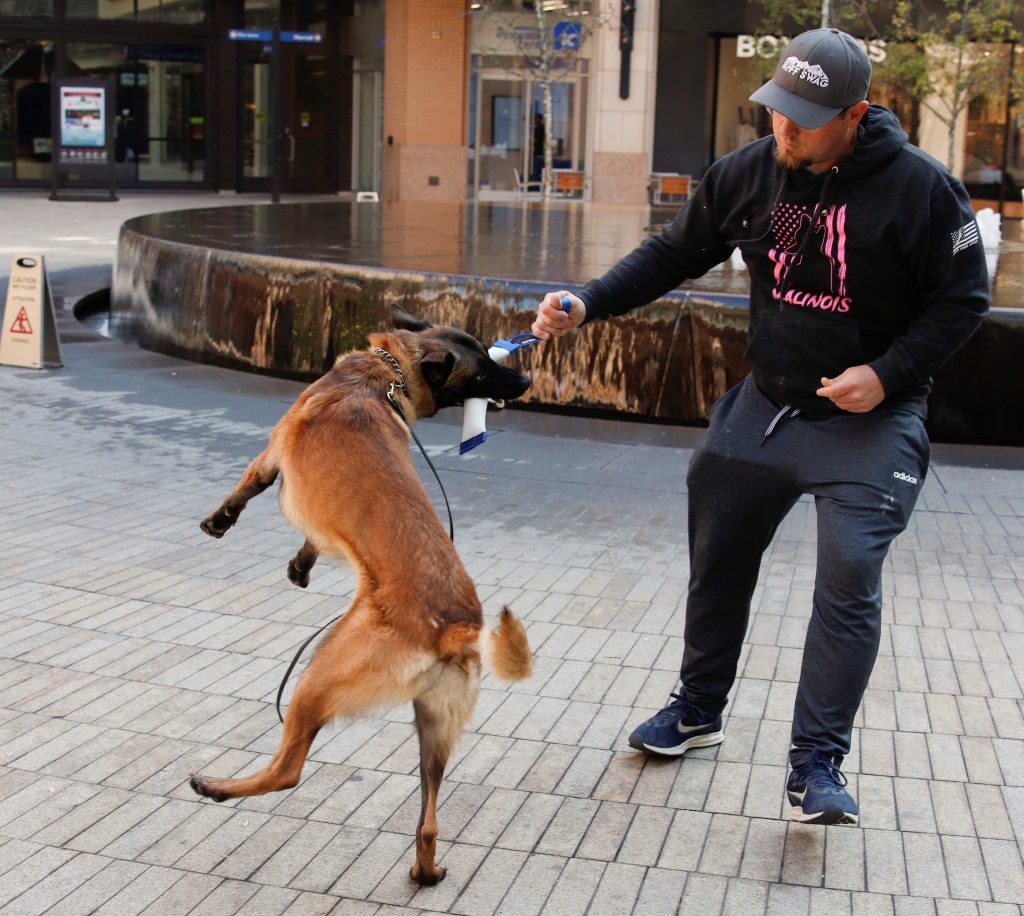
●Playing Fetch – If your dog likes to play fetch, then you can use that to increase obedience while in a state of arousal. To do this, have the dog sit, down, or do any other trick they know. As soon as the dog does what is asked say “yes” marking the good behavior then throw the ball/toy for a reward. If your dog will not return the ball, that is no problem. Have another ball ready, bounce it and get the dog excited so that they forget about the first one and come to you. Once they drop the toy/ball, repeat the process.
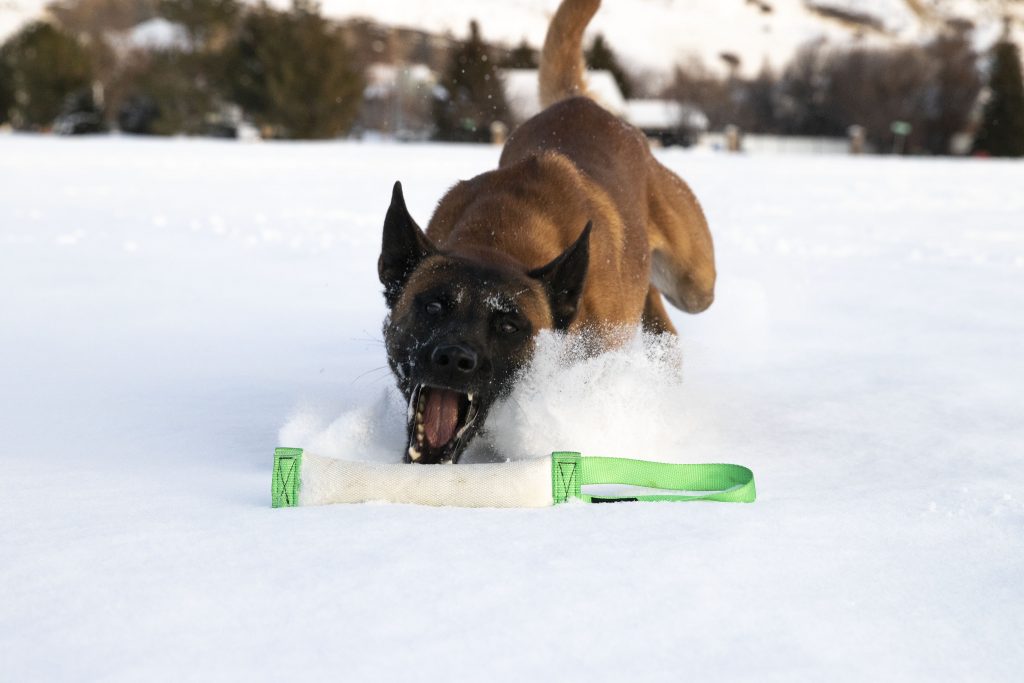
●Playing Tug – To play tug while tugging, have the dog “out” and then have the dog sit and as soon as the dog’s butt hits the ground say “yes” and the dog plays the game again.
Equipment and Supplies
We get asked what products we use and how to use them so here are some recommendations and guidelines for using them.
●Kibble- We like Taste of the Wild grain free dog food, it can be found at Cal Ranch, Tractor Supply, and other farming supply retailers.
●Training Treats- Vital or Fresh Pets is our favorite training treat but we also recommend Red Barn Naturals. You can get either of these from Petco. Use the portion recommendations on the packaging. These training treats are high in protein and can be used as a full meal. Cut the food up and divide it up into your daily training sessions.
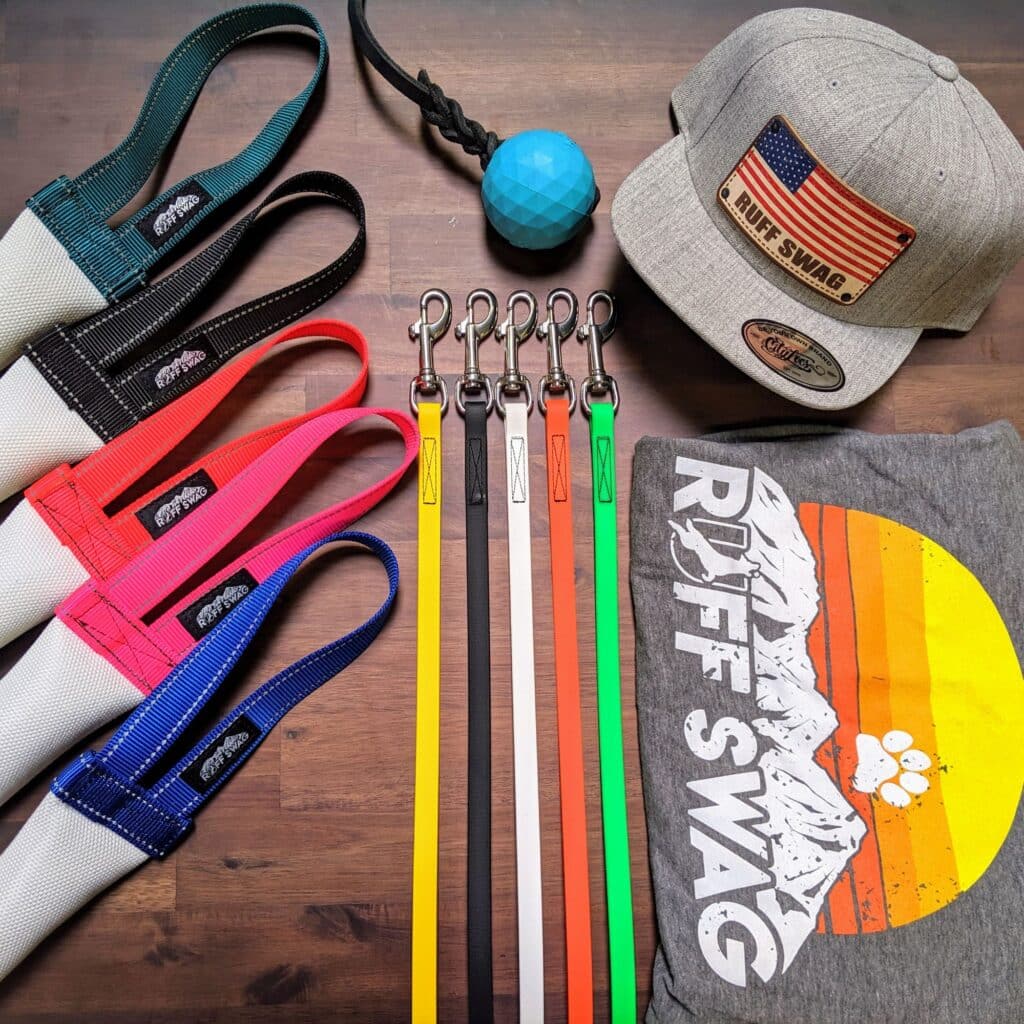
●Pinch collars, leashes, e-collars, tugs, and other toys that we use can be purchased at Ruff Swag online. You can find them here:
Aggressive Dog Instructions
Your aggressive dog just finished training with Innovative K9 Academy so you can turn him or her loose on a playground with kids or the dog park(we highly recommend avoiding dog parks) right? Absolutely not!! We have socialized your dog, built up their confidence, and gained their trust. During their training, we have exposed them to as many different situations as we can.
Dogs associate certain types of behavior with certain people, locations, and environments. Your dog is going to want to go right back to the same behavior it had before coming to us. It is very important that you do not put them in the same situations that caused the dog to be aggressive in the first place. Your dog must be introduced in the correct way. By the end of training with us, your dog will not be showing aggression with us present. This is because your dog will look to us for leadership in stressful situations and also due to the trust we have built with your dog. Your dog must believe 100% that bad things won’t happen to them in our presence.
Dogs smell fear, literally they can smell the adrenaline and cortisol flooding your body when you become anxious or nervous. So, when you are on a walk and you see a dog that you have previously had issues with, all of a sudden your breathing becomes heavy, your heart starts to race and you get a sick feeling in your stomach. As your anxiety level rises your dog immediately smells cortisol, the stress hormone spreading through your body, and if it’s bad enough your dog smells adrenaline flooding through your veins as well. To your dog this is a sign that you are both in danger and your dog needs to step up and protect *itself*. This is an important detail! Your dog is not showing aggression to protect us(as much as we’d like to believe that) your dog is showing aggression to protect itself. This is due to the experiences and situations your dog has been exposed to in the past.
Going forward, we want to help you build your dogs trust in you. This is done by many things. One of the most important is to never let things that your dog sees as dangerous happen to them. For example, if your dog shows aggression when dogs on a leash approach them and sniff them, this cannot happen or your dog will continue to show aggression and never be able to trust you that bad things won’t happen. Unfortunately, we don’t get to chose what things make our dogs nervous (just like humans). Our dog, Idole, who has been helping us train dogs for over 10 years now, has never met another dog on a leash before. This isn’t because she is aggressive, it is because we don’t want her to be.
Don’t reward bad behavior – One thing to remember is to never give praise, affection, or treats when your dog is acting nervous, anxious, afraid, or aggressive. If you do, you will be rewarding your dog for that unwanted behavior; which will cause it to continue.
Following these steps, you can continue the socialization and training that we have done. You and your dog will gain greater and greater trust in each other until you reach the point that you are totally confident that you have a stable, well balanced, and relaxed dog.
We are here to help you along the way. Thank you for allowing us to work with your dog. Feel free to text or call with questions at any point. Thank you for allowing us to spend time with a member of your family.
-Innovative K9 Academy
David Broderick
(385) 321-9002